Competitions made easy. Results everyone trusts.
Collect entries, run fair judging, and publish results people can trust.
Your first competition is free. No account needed for the demo.

- Collect entries
- Assign judges
- Score on any device
- Judge anonymously
- Track every handoff
- Publish results
What are you running?
Continuous Cup fits judged competitions of all kinds.

Homebrew, food & tasting
Blind flights, sample tracking, and published standings.

Awards & creative contests
Entries, shortlist rounds, and credible winners.

Pitch & science fairs
Clear rubrics and panel checks for presentations and projects.

Same-day events
Walk-up check-in, QR tracking, and live results.
Results you can defend
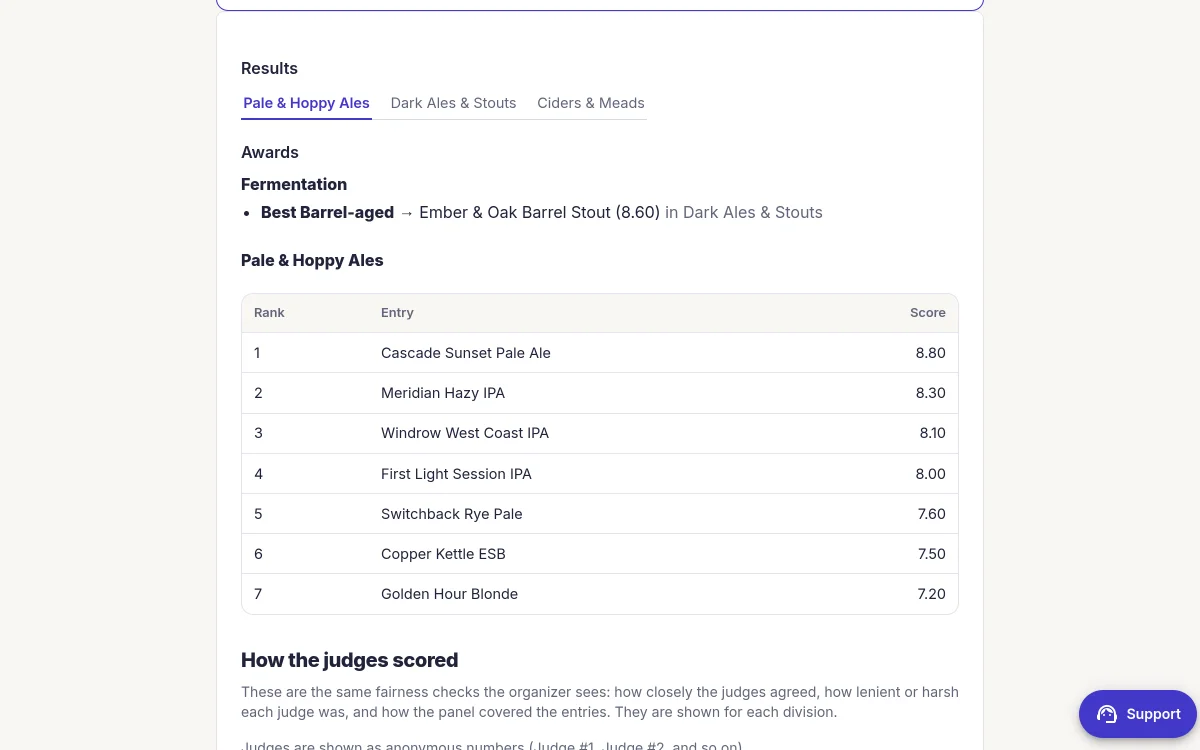
Explain a close result with the original ratings, calculated standings, and the judging record behind them.
- Review panel checks. Unusual scoring patterns call for a closer look, not an automatic penalty.
- Plan shared judging. Samples judged in common help compare judges; limited overlap leaves weaker evidence.
- Choose how to score. Fair score can account for tougher or more generous judges and change calculated standings while preserving original ratings.
- Frozen at completion. Keep the exact analysis that was published.
Open the sample report or sample competition.
Built for competition day
Check people in, track physical entries, and watch judging progress from one place.
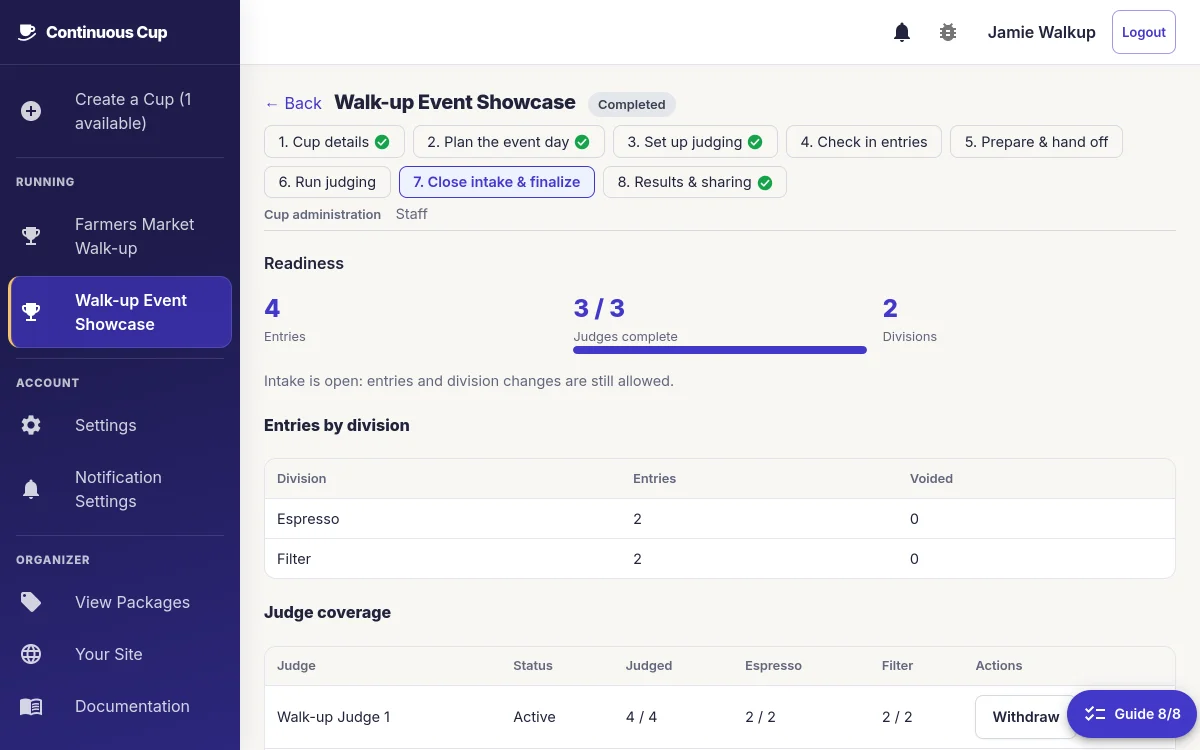
- Walk-up check-in. Register entries and issue anonymous codes at the door.
- QR chain of custody. Log every handoff with a scan.
- Live progress and leaderboard. Track judging while spectators follow live results.
Start free
Run your first competition free. Paid plans scale with the features and capacity you need.
Frequently asked questions
Do judges need to install anything?
No. Judges score in the browser on their own phone, tablet, or laptop.
How does anonymized judging work?
Anonymized judging, often called blind judging, is a choice you make per competition. Run it anonymized and every entry gets an anonymous code when it is submitted or checked in: judges see the code and your rubric, never the entrant's name, and the mapping between codes and names stays with the organizer.
What happens if one judge scores much harder than the others?
For judged entries, choose Raw or Fair score. Fair score uses samples judged in common and eligible history from earlier competitions with the same organizer to estimate differences in judge severity. Calculated scores and placements can change; original ratings remain as entered. With little shared or completed judging, review coverage before relying on a close result. Panel checks can flag unusual patterns for human review; a flag does not prove a judge is wrong.
Can spectators follow the results live?
Yes. Public competitions get a shareable results page with live standings while the event runs, and completed walk-up events add a transparency section showing how the judges scored.
Can the audience vote as well as the judges?
Yes. Public voting can run alongside judged scoring with upvote, star, ranked-choice, or range ballots, tallied separately or blended with the judges' scores at a weight you choose.
What does Continuous Cup cost?
A generous free tier covers smaller competitions, and paid pricing is based on features and scale, with packages that fit anything from a single event to a large organization; see the pricing page for current plans.
Run a competition people take seriously
Set up your event, invite the panel, and publish results everyone can trust.